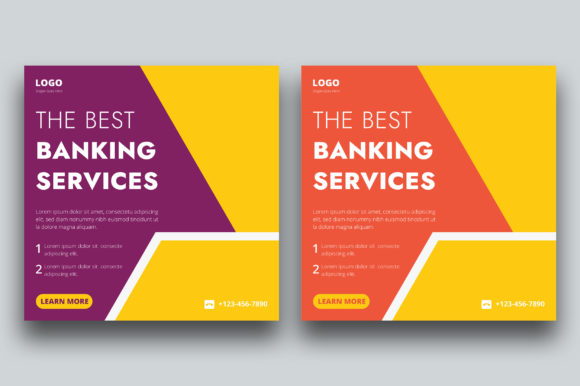
Strategic Visual Communication: Evaluating Social Media Post Templates for Banking Services
In the highly regulated and trust-dependent sector of financial services, digital presence is no longer optional; it is a fundamental component of client acquisition and retention. However, maintaining a consistent brand identity across platforms like Facebook and Instagram requires more than just posting updates. It demands a strategic approach to visual communication. This is where a specialized Social Media Post for Banking Services becomes a critical asset. Unlike generic marketing templates, these designs are engineered to convey stability, professionalism, and clarity—traits essential for any financial institution.
For marketing managers, brand strategists, and small business owners in the finance niche, selecting the right design framework involves weighing flexibility against brand compliance. A high-quality template offers a balance between aesthetic appeal and functional adaptability, ensuring that every post reinforces the institution's credibility while engaging a modern audience.
Defining the Specialized Banking Design Framework
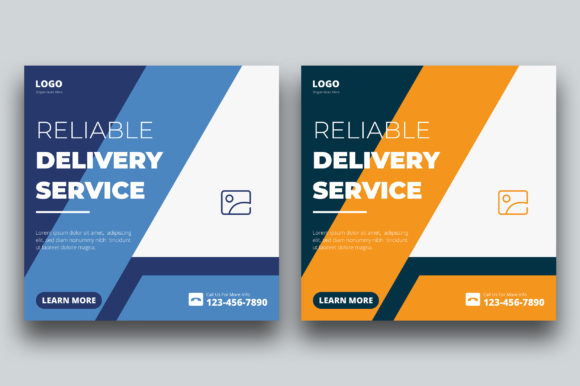
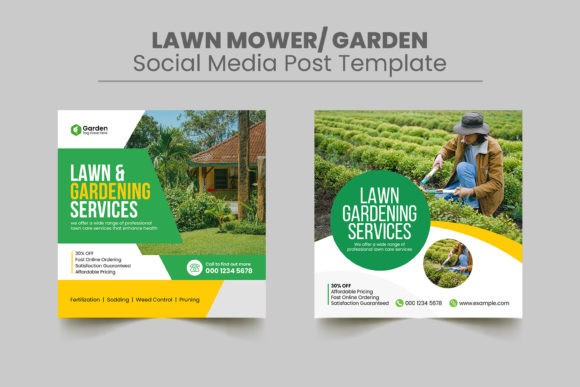
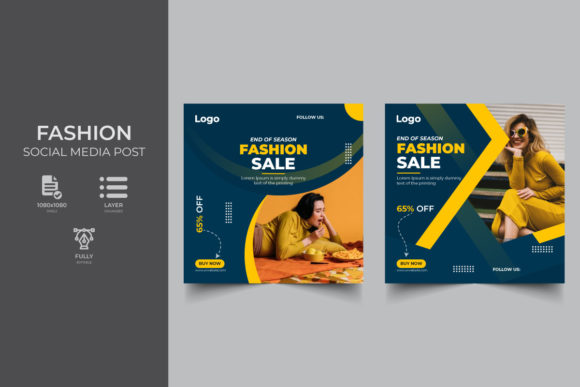
A Social Media Post for Banking Services is distinct from standard commercial templates due to its specific focus on trust signals and information hierarchy. While a retail clothing brand might prioritize bold colors and dynamic motion to drive impulse buys, banking communications must prioritize legibility, security cues, and professional tone.
These templates typically feature structured layouts that accommodate complex data points, such as interest rates, loan terms, or investment tips, without cluttering the visual space. The distinction lies in the psychological impact of the design elements:
- Color Psychology: Utilizing RGB color schemes that align with financial stability (often blues, greens, and greys) rather than aggressive reds or oranges.
- Typography: Employing free, clean fonts that ensure high readability on mobile screens, crucial for users scrolling quickly through feeds.
- Resolution Standards: Adhering to 300 DPI resolution standards even for digital use ensures that when assets are repurposed for print or high-definition displays, the brand image remains crisp and authoritative.
The core value proposition of using a dedicated template is the ability to maintain brand consistency. When a customer sees a post, they should immediately recognize the source before reading the handle. A well-structured template acts as a visual anchor, reducing cognitive load for the audience and increasing the likelihood of engagement.
Comparative Analysis: Custom Design vs. Templated Solutions
When evaluating resources for social media content, institutions generally face a choice between hiring a designer for custom illustrations, using drag-and-drop online builders, or utilizing editable vector templates (such as those compatible with Adobe Illustrator). Each approach has distinct tradeoffs regarding cost, time, and brand control.
The Case for Editable Vector Templates
Editable templates, particularly those designed for Adobe Illustrator, offer a middle ground that often suits growing financial firms best. Unlike rigid online builders that limit customization to pre-set blocks, a vector-based template allows for granular control over every element.
Key Advantages:
- Scalability: Because these files are vector-based, they can be resized from an Instagram story (1080x1920 px) to a Facebook cover or a printed brochure without losing quality.
- Brand Accuracy: You can input exact hex codes for your brand colors, ensuring strict adherence to brand guidelines, which is often difficult in free online tools.
- Efficiency: Once the master file is set up, creating a month's worth of content involves simply swapping text and images, significantly reducing turnaround time compared to custom design.
Limitations of Generic Alternatives
Conversely, using generic "business" templates often results in a mismatched tone. A template designed for a tech startup may feel too casual for a mortgage lender. Furthermore, free online generators often compress images, leading to pixelation that can subtly undermine the perception of a bank's attention to detail. In the financial sector, where precision is paramount, low-resolution graphics can inadvertently signal a lack of professionalism.
Technical Specifications and Their Impact on Engagement
The technical backbone of a Social Media Post for Banking Services template directly influences its usability and final output quality. Understanding these specifications helps in making an informed decision about which resource to adopt.
Resolution and Clarity: A requirement of 300 DPI (Dots Per Inch) is traditionally associated with print, but in the context of banking assets, it serves a dual purpose. It ensures that any asset derived from the template looks pristine on retina displays and 4K monitors. High-definition visuals correlate with higher perceived value; a blurry chart explaining compound interest is less likely to be trusted than a sharp, clear one.
Dimensions and Platform Fit: The standard 1080×1080 px format remains the gold standard for square posts on both Facebook and Instagram. This symmetry ensures maximum screen real estate on mobile devices. However, the flexibility to edit these dimensions is crucial. A robust template allows you to quickly adapt the layout for vertical stories or landscape LinkedIn banners without breaking the design grid.
Font Licensing: The inclusion of free fonts is a significant practical benefit. Financial institutions often have strict legal compliance regarding asset usage. Using templates that rely on open-source or free-to-use typography eliminates the risk of copyright infringement and reduces overhead costs associated with font licensing.
Decision Factors: When to Adopt This Approach
Determining whether a specialized banking template is the right fit depends on your current operational capacity and marketing goals. Here are several scenarios to help evaluate the necessity:
- You need speed without sacrificing quality: If your team needs to react quickly to market changes (e.g., fluctuating interest rates) but lacks the time for full custom design, an editable template is ideal.
- Brand consistency is a priority: If your current feed looks disjointed with mixed fonts and varying color palettes, a unified template system will instantly professionalize your presence.
- You require multi-channel adaptation: If you plan to repurpose social content for email newsletters, website banners, or physical flyers, a high-resolution, vector-based source file is essential.
However, this approach may not be suitable if your brand strategy relies heavily on hyper-custom, artistic illustrations that defy grid structures, or if you lack access to software like Adobe Illustrator to edit the files. In such cases, a fully managed design service or a simpler drag-and-drop tool might be more appropriate despite the limitations in finesse.
Best Practices for Implementation
To maximize the return on investment from a Social Media Post for Banking Services template, consider the following implementation strategies:
1. Establish a Content Hierarchy: Before editing, decide what information is most important. Is it the headline rate? The call to action? Or the disclaimer? Use the template's layers to ensure the most critical data stands out. Do not crowd the design; white space is a luxury that signifies confidence.
2. Maintain Regulatory Compliance: Banking posts often require disclaimers. Ensure the template has designated, legible areas for fine print. Shrinking legal text to unreadable sizes to fit a design is a compliance risk. A good template accounts for this reality.
3. Rotate Visual Assets Carefully: While the template provides structure, the images within it should vary. Use the "preview only" note as a reminder to source your own authentic imagery. Stock photos of shaking hands are cliché; consider using images of your actual branch, team, or localized community events to build genuine connection.
4. Test Color Variations: Even within a brand palette, test different background contrasts. A dark mode version of your template might perform better for evening browsing, while a light, airy version may work better for morning educational tips.
Final Evaluation
Ultimately, the choice to utilize a professional Social Media Post for Banking Services template is a decision to prioritize efficiency and brand integrity. In a digital landscape saturated with noise, the clarity and professionalism offered by a well-structured, high-resolution design can differentiate a financial institution from its competitors. By leveraging tools that offer easy customization, RGB precision, and flexible formatting, banks and fintech companies can focus less on the mechanics of design and more on the substance of their message.
For organizations aiming to scale their digital outreach while maintaining a polished, trustworthy image, investing in a robust, editable design framework is a pragmatic step forward. It bridges the gap between high-end agency quality and in-house agility, providing a sustainable foundation for long-term social media success.