Maximizing Impact with a Professional World Environment Day Social Media Post
In the modern digital landscape, timing and visual fidelity are the twin pillars of successful communication. For marketers, small business owners, and content creators, aligning brand messaging with global observances offers a unique opportunity to connect with audiences on shared values. World Environment Day Social Media Poste assets serve as a critical component in this strategy, bridging the gap between conceptual awareness and tangible engagement. When executed correctly, these visual tools do more than fill a calendar slot; they integrate seamlessly into broader marketing workflows, enhancing brand reputation while promoting ecological responsibility.
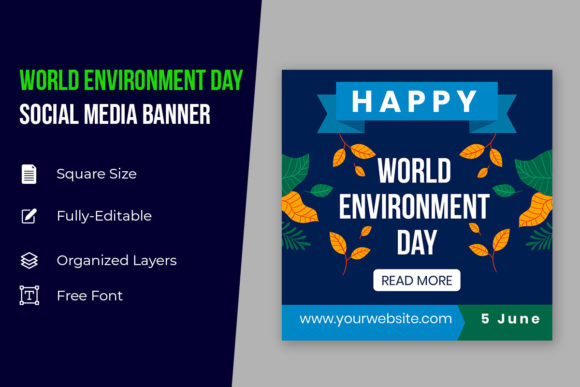
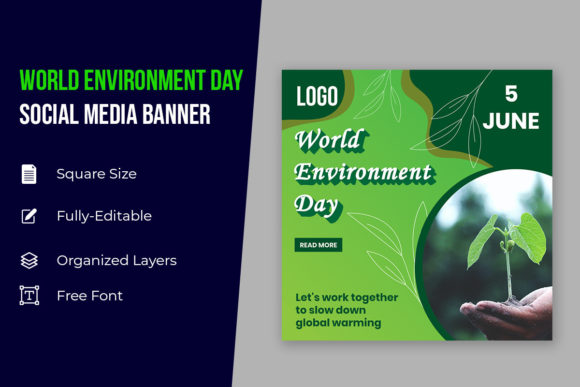
The concept of World Environment Day extends beyond a single date on the calendar. It represents a global movement toward sustainability, conservation, and the protection of our planet's ecosystems. For professionals managing social media channels, the challenge lies in translating this vast, abstract concept into a compelling visual narrative that stops the scroll. This is where high-quality design resources become indispensable. Utilizing a dedicated World Environment Day vector illustration or a pre-designed World Environment Day background allows creators to bypass the time-consuming process of building graphics from scratch, ensuring that the final output meets professional standards without exhausting internal design resources.
Integrating Design Assets into Your Content Workflow
Effective content creation is rarely a linear path; it is a cyclical process involving planning, execution, review, and distribution. Incorporating a World Environment Day card or template into this workflow requires strategic foresight. The most successful campaigns begin weeks in advance. By securing editable files early, teams can align the visual theme with their specific campaign goals, whether that involves launching a green product, announcing a sustainability initiative, or simply educating followers about local environmental issues.
The versatility of file formats plays a pivotal role in this integration. A robust design package typically includes PSD, AI, EPS, and PDF files. Each format serves a distinct purpose within a professional pipeline. The PSD (Photoshop) file is ideal for raster-based editing, allowing marketers to manipulate photos, adjust lighting, and apply complex layer styles. The AI (Illustrator) and EPS files are essential for vector-based adjustments, ensuring that logos and text remain crisp regardless of scaling. This compatibility ensures that the asset fits smoothly into existing workflows, whether the team relies primarily on Adobe Photoshop for social graphics or Illustrator for brand-consistent vector work.
Consider the workflow of a small business owner who manages their own social media. Time is a scarce resource. Downloading a template that features Easy customizable editable Smart Objects drastically reduces production time. Instead of designing a layout, selecting fonts, and sourcing icons, the user simply double-clicks the smart object, inserts their own photograph or logo, and saves. This efficiency allows the creator to focus on crafting the accompanying caption and engaging with the community, rather than getting bogged down in technical design hurdles.
Technical Specifications and Quality Control
In the realm of social media, resolution and dimension are non-negotiable. Platforms like Instagram, Facebook, and LinkedIn have specific requirements for optimal display. A template designed at 1080×1080 Pixels ensures that the graphic appears sharp on high-density mobile screens, which is where the majority of social consumption occurs. Furthermore, designing in 72 DPI Resolution with an RGB color space is standard for digital display, guaranteeing that colors appear vibrant and true to life on monitors and smartphones.
Quality control is another critical factor. A 100 Layered Full Editable structure provides the flexibility needed to adapt the design to various brand guidelines. Professionals often need to tweak color palettes to match corporate identity or swap out imagery to reflect local contexts. Having access to every individual layer means that no element is locked or inaccessible. This level of customization prevents the "cookie-cutter" look that can dilute brand authority. It allows the Green Eco Earth concept to be interpreted uniquely by each organization, maintaining the core message while preserving brand distinctiveness.
Moreover, the inclusion of multiple file formats supports long-term usability. An EPS or PDF file might be required for print collateral, such as flyers or office posters, extending the life of the digital asset beyond social media. This cross-platform compatibility maximizes the return on investment for the design resource, making it a versatile tool in the marketer's arsenal.
Enhancing Engagement Through Visual Storytelling
The primary goal of any social media post is to increase the attractiveness of your visitors and drive engagement. A generic text post rarely achieves the same reach as a visually striking graphic. A well-crafted World Environment Day background featuring elements like lush forests, clean oceans, or stylized earth vectors immediately communicates the theme. It sets the emotional tone before the user even reads the headline.
When using these templates, consider the psychological impact of the imagery. The "Green Eco Earth" concept resonates deeply with audiences concerned about climate change and sustainability. By utilizing high-quality vector illustrations that depict hope, renewal, and action, brands can foster a positive connection with their audience. The visual should not just inform; it should inspire action. Whether the call to action is to reduce plastic use, plant a tree, or support a green initiative, the visual foundation provided by the template amplifies the message.
Furthermore, consistency in visual quality builds trust. Audiences are increasingly savvy; they can distinguish between amateurish graphics and professional designs. Using a template that adheres to design principles—balanced composition, harmonious color theory, and clear typography—signals professionalism. It suggests that the brand cares enough about the cause to present it with dignity and clarity.
Practical Implementation Tips for Creators
To get the most out of these resources, preparation is key. Before opening the design file, gather all necessary assets: high-resolution logos, brand hex codes, and any specific photography you intend to use. Review the Information File and Help File included in the download. These documents often contain valuable insights regarding font usage. Since many templates utilize Free Font Used links, ensuring you have the correct typefaces installed beforehand prevents workflow interruptions.
Customization should be approached with a mindset of adaptation rather than mere substitution. While the template provides a strong foundation, tweaking the hierarchy of text or adjusting the placement of elements can make the design feel native to your brand. For instance, if your brand voice is bold and direct, you might enlarge the headline and simplify the background elements. If your tone is gentle and educational, you might soften the contrast and allow the vector illustrations to take center stage.
Collaboration is also streamlined when using layered, editable files. In agency settings or larger teams, a copywriter can draft the text in a separate document while a designer manipulates the PSD or AI file. Because the layers are organized and named logically, handoffs are seamless. This organizational efficiency reduces the risk of errors and ensures that the final World Environment Day card is polished and error-free.
Long-Term Value and Community Support
Investing in high-quality design templates is not just about solving an immediate need; it is about building a library of reusable assets. A well-structured template can be archived and repurposed for future campaigns with minor adjustments. The scalability of vector files means that as your brand grows or your screen real estate requirements change (e.g., moving from square posts to stories or banners), the core assets remain viable.
Finally, the ecosystem of digital marketplaces thrives on feedback and community support. When a template proves useful, taking the time to rate it and recommend the artwork helps other professionals discover reliable resources. Constructive feedback also assists designers in improving their future offerings. If specific needs arise that fall outside the scope of the standard template, many creators offer custom design services. Reaching out for a custom designed template can provide a tailored solution that perfectly aligns with unique campaign objectives.
In conclusion, the strategic use of a World Environment Day Social Media Poste template is a practical, efficient, and impactful way to participate in global environmental conversations. By leveraging editable, high-resolution assets, professionals can maintain high standards of quality while optimizing their workflows. Whether you are a freelancer, a corporate marketer, or a passionate advocate, these tools empower you to tell your story effectively, driving engagement and fostering a deeper connection with your audience through the universal language of visual design.